Written by Praveen Kumar
Monday, July 13, 2026
AVC 101 - A Free Foundation Course to Start Your Valve Flow Simulation Journey
By
Praveen Kumar

What is AVC 101 about?
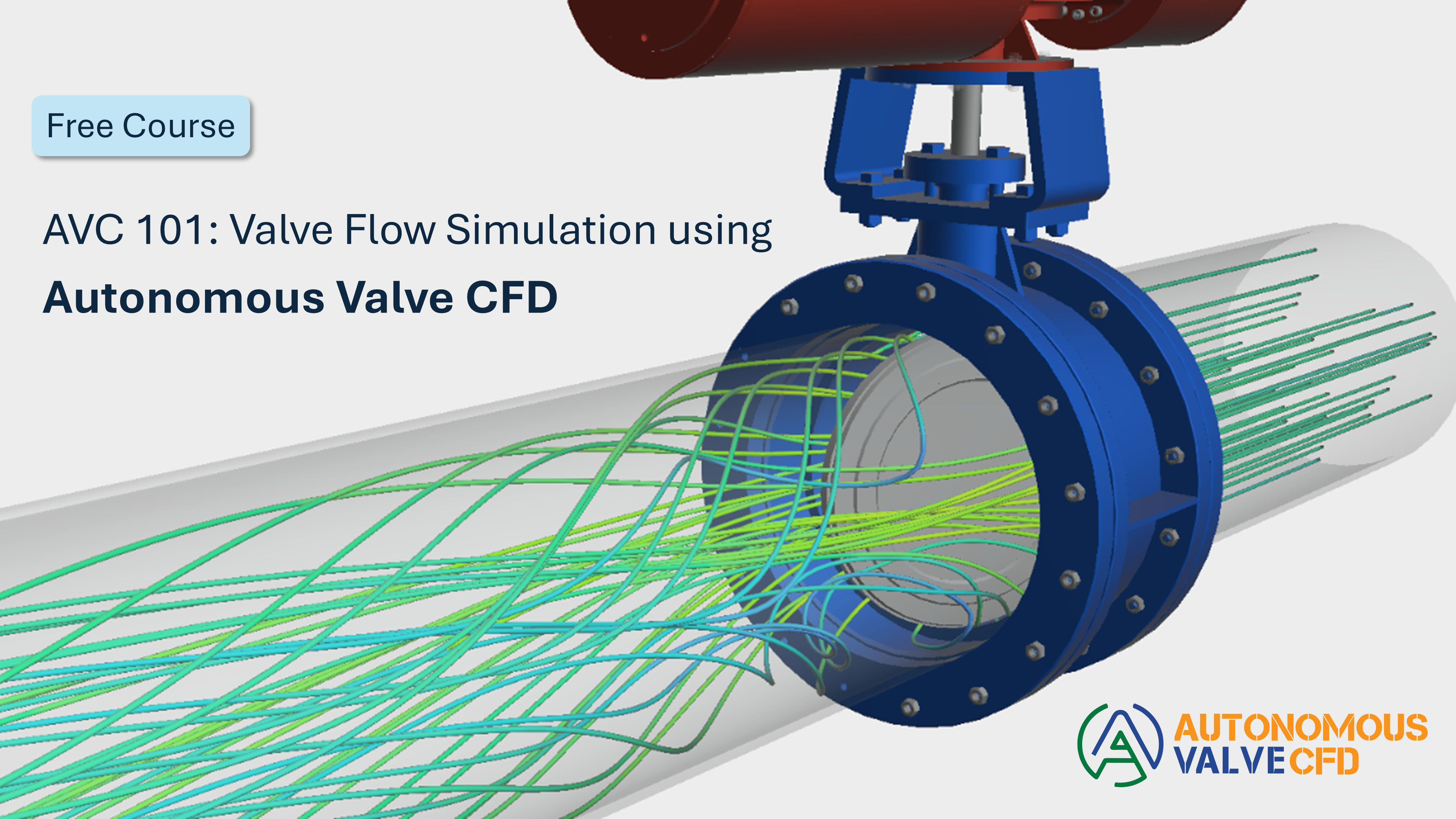
AVC 101 is a beginner-friendly course that explains the key concepts behind valve flow performance and virtual flow loop testing. This course explains how Autonomous Valve CFD (AVC) can be used to generate valve performance data through CFD simulations.
The best part? No prior CFD knowledge is required.
The course covers important topics such as valve flow coefficient, hydrodynamic torque coefficient, physical flow loop testing, conventional CFD challenges, and the AVC workflow.
What you will learn
By completing this course, learners will be able to:
- Understand the Valve Flow Coefficient (Cv) and the Hydrodynamic Torque Coefficient (Cdt) and their role in valve sizing and flow capacity evaluation.
- Learn how Cv and Cdt curves are generated through physical flow loop testing.
- Discover the challenges involved in physical testing and conventional CFD simulation.
- Learn how Autonomous Valve CFD helps simplify valve flow simulation using an automated, cloud-based workflow.
- Complete a step-by-step tutorial to run the first valve flow simulation using AVC.
Course structure
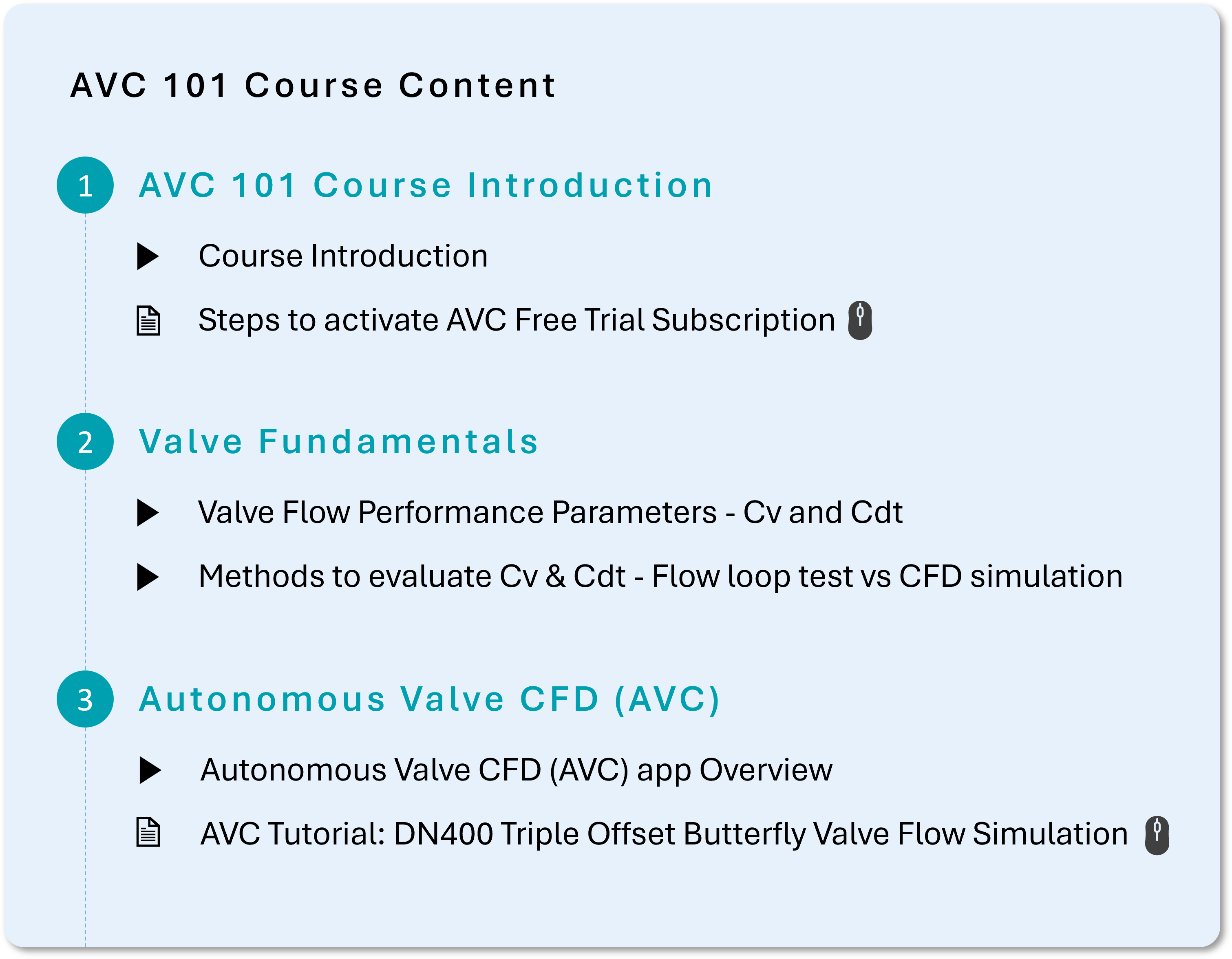
The course is divided into three simple sections:
Hands-on Tutorial
The course includes a practical, step-by-step tutorial for a DN400 Triple Offset Butterfly Valve.
In this tutorial, learners will activate their AVC trial, open the dashboard, upload the valve CAD model, define the required inputs, submit the simulation, and review the results.
The CAD file required for the tutorial is provided as a downloadable resource, along with a tutorial guide to help learners follow the complete workflow.
Requirements
No prior CFD knowledge is required. The course covers the necessary fundamentals before introducing the AVC workflow.
However, we strongly recommend taking the course on a laptop or desktop computer, especially if you want to follow the hands-on tutorial. The tutorial involves activating the AVC trial, accessing the app dashboard, downloading the CAD file, and running the simulation, which is not practical from a mobile device.
Start learning
The course is available on Udemy. You can access the course using the links below:
Course on Udemy
Download Resources
The course includes a practical, step-by-step tutorial for a DN400 Triple Offset Butterfly Valve. You can download the required supporting documents and CAD file here:
Trial Activation Guide
Tutorial Guide
CAD File - Butterfly Valve
Complete the course, follow the tutorial, and add one more practical skill to your engineering toolkit.
Now you can not only design valves — you can also verify and understand their flow performance using AVC.
Comments
Recent posts